Military Space Opera · Book One · Galatea Universe
Galatea.
Two fleets, one planet, and something worse waiting at the edge of the system.
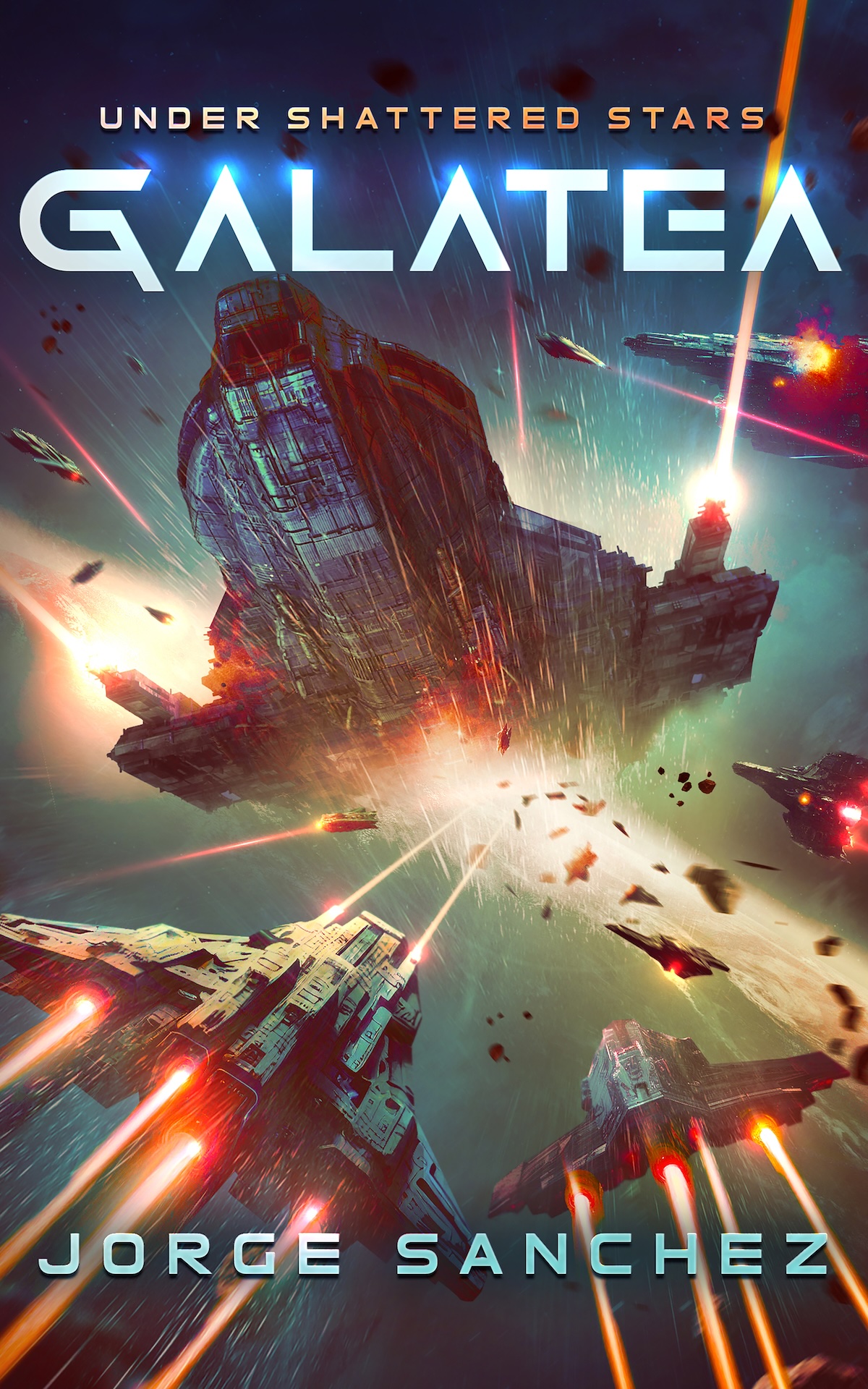
Two fleets, one planet, and something worse waiting at the edge of the system.
Tomoe Mori didn't expect to spend the war babysitting a planet that wasn't hers. As captain of the strike carrier Galatea — flagship of the Colonial Fourth Fleet — she's fought Earth Union forces across three systems. Kliinat was supposed to be a straightforward assist mission: help the Klii hold their ground, deny the Union a foothold, leave. It stopped being straightforward about six hours in.
The novel moves across four lenses: Mori's bridge, where fleet actions get called in real time with incomplete information; Carson's boots, where marine humor is the only thing standing between a man and the realization of what he's actually doing; Jammer's cockpit, where a Dauntless fighter jockey runs intercepts against Union craft in the kind of dogfighting that owes everything to Freespace and BSG; and Maalek's divided loyalties, a Klii resistance fighter turned Colonial lieutenant who is very aware he's fighting alongside the people his people were fighting last year. The Hasha arrive late. Their ships look like something organic grew around the hull. They don't negotiate.
What holds the book together isn't the fleet action — it's what happens when former enemies have to trust each other fast enough to matter. The Union and the Colonies have been killing each other for years. The Hasha don't care. That math is simple. Living with what it costs to solve it isn't.