Mythic Urban Fantasy · Two-book series · In development
Fire of Dawn.
The gods made a truce. Pandora made sure they couldn't break it. Someone should have asked her permission first.
The gods made a truce. Pandora made sure they couldn't break it. Someone should have asked her permission first.
Liz Walsh was a curator at the Natural History Museum in New York. She knew mythology the way a cardiologist knows anatomy — thoroughly, professionally, and with no expectation that it would ever try to kill her. Then a fragment of a Greek vessel turned up somewhere it had no business being, and then another, and then a third, and the itch to find the rest of them stopped feeling like curiosity and started feeling like something older.
The Fire of Dawn series moves across two registers: Liz's close-in, wry, increasingly-overwhelmed perspective as a woman whose PhD prepared her for exactly none of this, and Otto's — Hildisvini, an immortal Viking warrior sent by Freyja to keep Liz alive and the fragments out of the wrong hands. The wrong hands include archangels, werewolves, demons, and gods from pantheons that were supposed to have agreed to stay out of each other's business. They didn't.
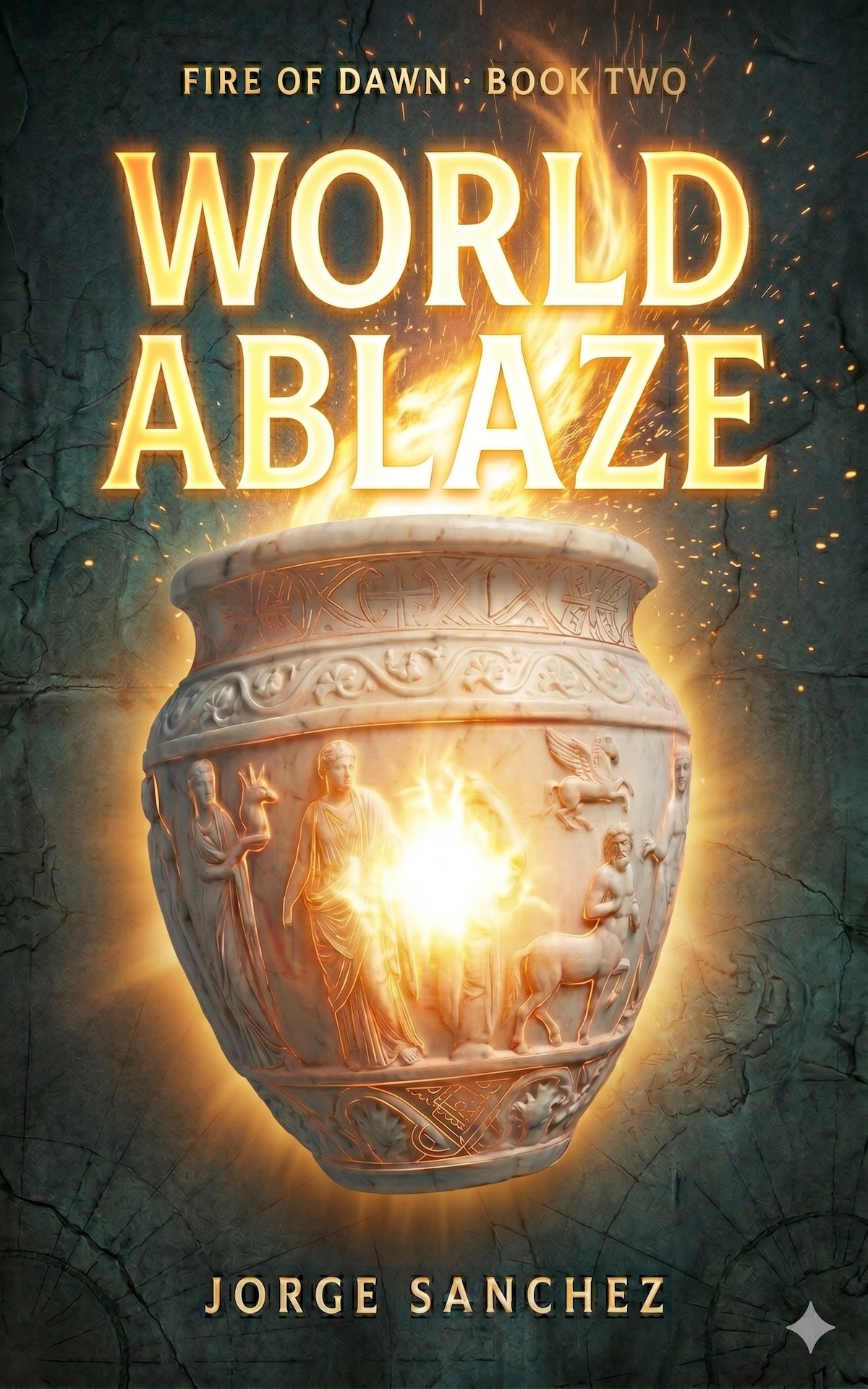
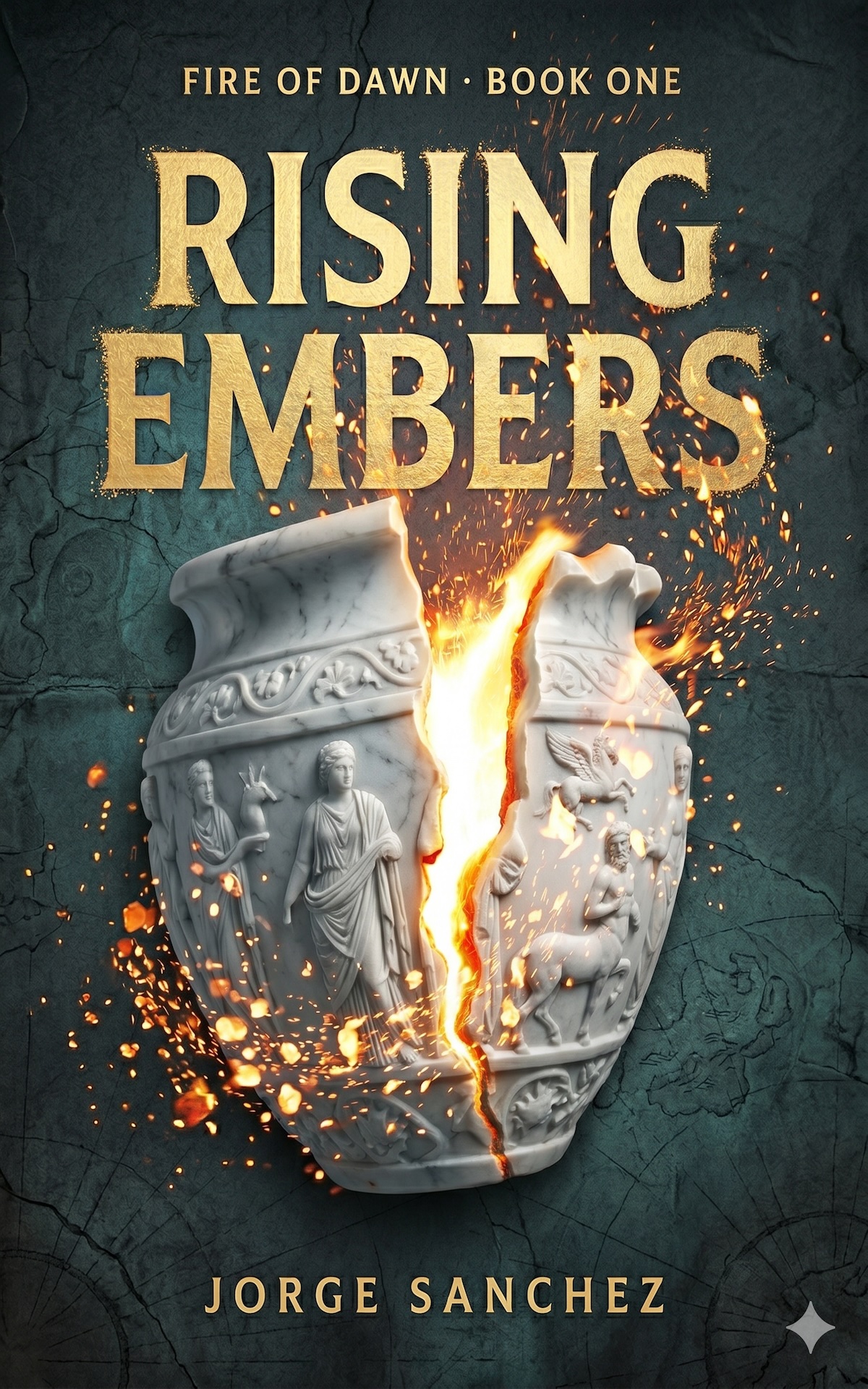
The vessel is why. Before it existed, the Olympians, the Norse, and a half-dozen other pantheons were in open war. They came together once, added their essence to a single failsafe, and appointed a neutral guardian. Pandora looked at what she'd been handed, saw the gods already looking for loopholes, and destroyed it. Except it couldn't be destroyed. It fragmented. The power she spent to make that happen erupted Vesuvius. The pieces have been scattered for two thousand years. Liz can feel them.
By Book 2, she's found them all. The power reasserting itself through her bloodline — Pandora's flame, dormant for two millennia — is like nothing any pantheon has encountered since before the truce. The gods who wrote the failsafe are very interested in what happens next. So are the ones who never agreed to it.