Steampunk Revenge · In active development
Seven Years Ascending.
They took her name, her rank, and seven years. She kept the anger. She built the rest.
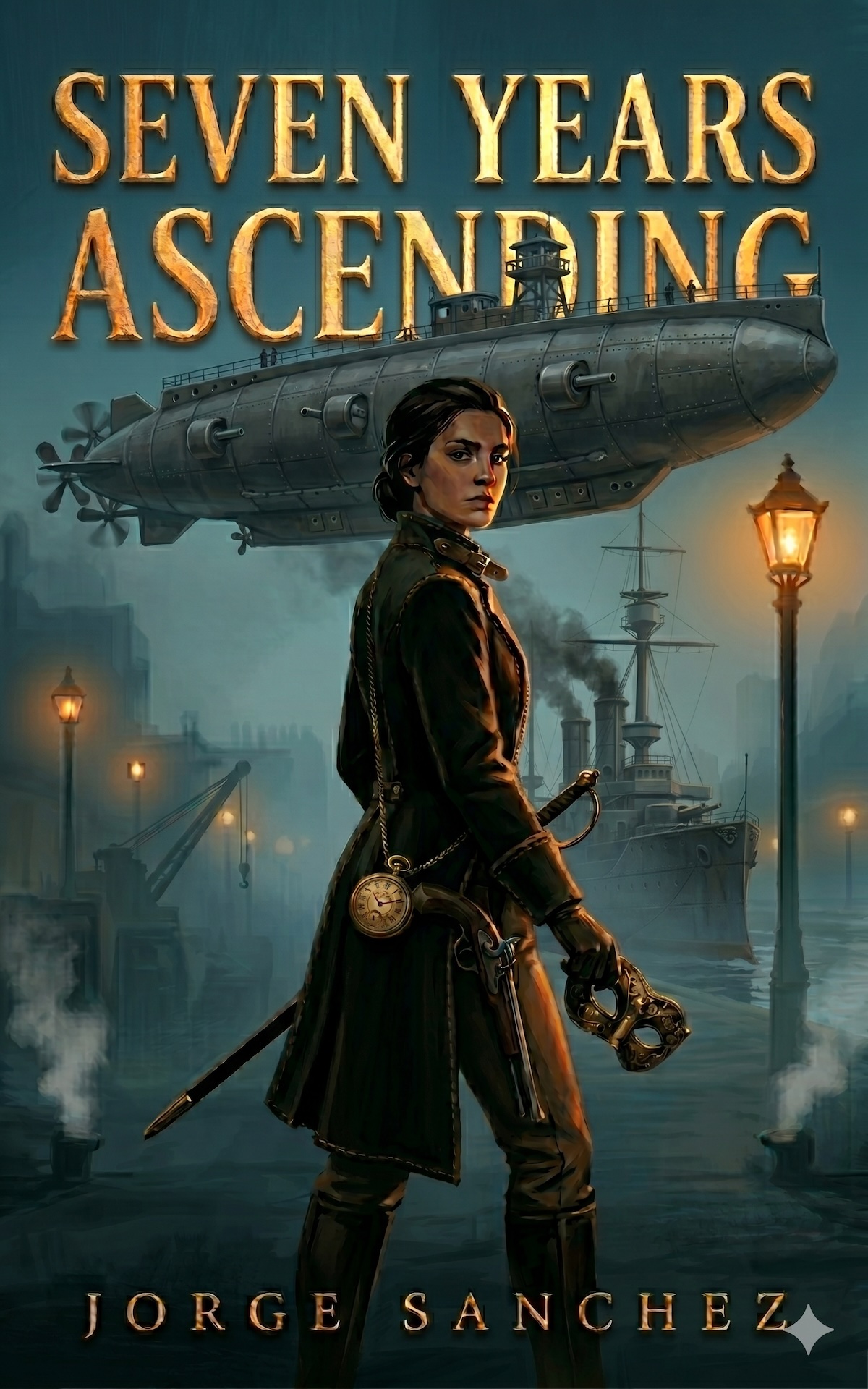
They took her name, her rank, and seven years. She kept the anger. She built the rest.
Alexandra Langley was twenty-three and a second lieutenant aboard HMS Revenge when the conspiracy closed around her. She didn't see it until the court martial was already decided. The charges were false. The men who filed them knew that. By the time she understood the full shape of what had been done to her — the names, the mechanism, the careful architecture of her ruin — she had seven years of prison to think about what she intended to do about it.
The world is an alternate 1910s where airships have replaced warships, steam powers everything from tanks to motorcars, and the British Empire runs on coal, hydrogen gas, and the carefully maintained fiction that its institutions are just. The novel moves between three of these worlds: the Royal Navy's officer class, the criminal underworld of privateers and smugglers, and the aristocracy — and Alexandra moves through all three, wearing a different face in each. The conspiracy that imprisoned her reaches into all of them. So does her plan.
Revenge, in this world, is architectural. It requires patience, resources, and the willingness to become someone the people who wronged you would never recognize. Alexandra has had seven years to develop all three. The men who signed her warrant are comfortable now. They've stopped looking over their shoulders. That was their second mistake.